
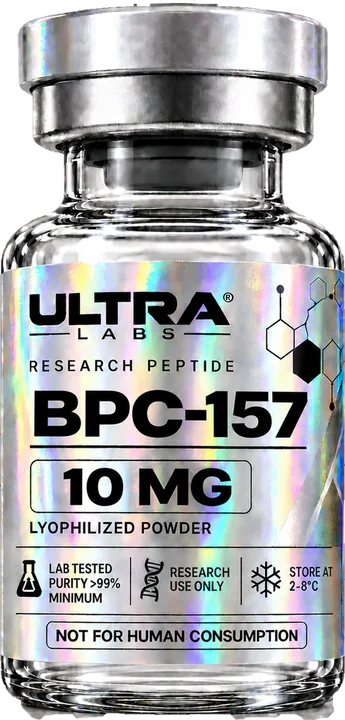
BPC-157
A synthetic pentadecapeptide derived from a partial sequence of a protein found in gastric juice. Almost all published work comes from cell and rodent models.
Level of evidence
Preclinical — cell and animal studiesWhat it is
BPC-157 is a 15-amino-acid peptide first described in the early 1990s by a research group at the University of Zagreb. It corresponds to a fragment of a larger protein isolated from gastric juice and is produced by chemical synthesis.
State of the research
Most publications study rodent models of gastrointestinal, tendon, ligament and muscle injury, and a large share comes from the same research group. Controlled human clinical trials have not been published, so effects and safety in humans are unknown.
Sources
Last reviewed: October 2026
Summaries of published scientific literature, for information and laboratory research only. They do not describe uses of our products, are not medical advice and do not imply that any compound is safe or effective in humans. Our products are not for human or animal consumption.